How to choose a reliable solar street light manufacturer?
it’s important to think of solar lighting as a complete system, not just a fixture. They are small power systems installed outdoors. A good price is useful, but a wrong system can cost more later. The right manufacturer should help me reduce risk before the order starts, during production, and after the lights reach the project site.
Does the manufacturer ask project questions before quoting?
I worry when a supplier gives me a price in two minutes. A fast quote can hide a weak system, wrong battery size, or poor lighting schedule.
I trust a manufacturer more when I am asked about the country, sunshine, rainy season, pole height, road width, pole spacing, target lighting area, working hours, and dimming mode before a quote is made.
Why do these questions matter?
I have handled many overseas solar street light inquiries. I have learned that the same lamp body can need a very different system in different places. A road in Southeast Asia can have different rainy season pressure from a road in the Middle East. A warehouse entrance in Africa can need a different lighting plan from a village road in South America. If I quote only by “100W” or “200W,” I am not really solving the project problem.
I ask these questions because each answer changes the system. The battery capacity, solar panel size, LED power, lighting angle, dimming mode, and controller setting all need to match the use case. When a buyer only compares price sheets, the buyer may compare products that look similar but work very differently.
| I ask this question | I use the answer to check |
|---|---|
| I ask for the installation country or region | I check sunlight level, heat, rain, and local use habits |
| I ask for pole height | I check light distribution and suitable lamp power |
| I ask for road width and pole spacing | I check brightness coverage and uniformity |
| I ask for daily lighting hours | I check battery and energy plan |
| I ask for dimming mode | I check controller setting and runtime balance |
| I ask for rainy season conditions | I check backup power and real risk |
What is a warning sign?
I see a warning sign when the manufacturer does not ask for basic project information. I also see a warning sign when the quote only says wattage, battery size, and price, with no explanation. A reliable manufacturer does not need to make the process slow. The supplier only needs to ask the right questions before offering the right configuration.
Is the supplier treating solar street lights as a complete system?
I have seen buyers focus on LED watts and forget the battery. That mistake can make a solar street light look strong in a catalog and fail at night.
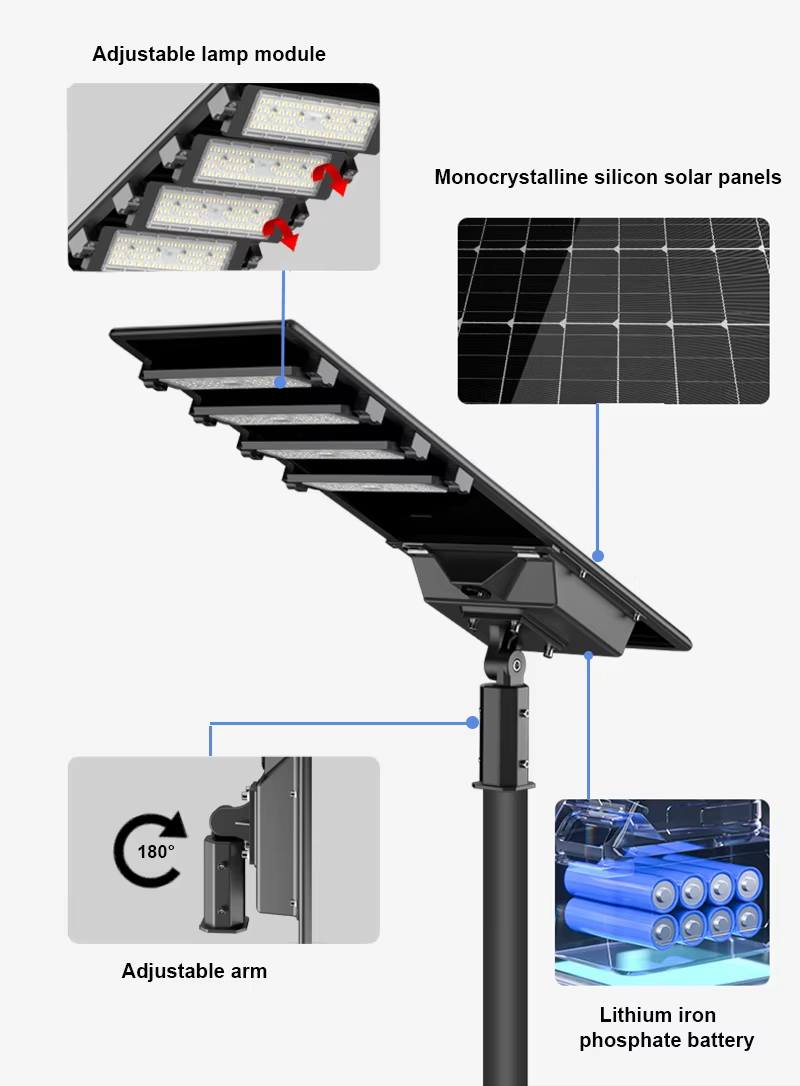
I choose a manufacturer who explains how the solar panel, battery, controller, LED module, housing, heat dissipation, and lighting program work together as one system.
Why is system matching more important than wattage?
I often explain this point during OEM and ODM discussions. A solar street light is not powered by a stable grid. It depends on daily energy collection and stored energy. If the solar panel is too small, the battery cannot be charged well. If the battery is too weak, the light cannot support long nights. If the controller is poor, the power use can be wasteful. If the housing has poor heat handling, the LED module can lose performance faster.
I do not judge a solar street light only by its rated power. I check the energy chain. The panel must collect enough energy. The battery must store enough energy. The controller must manage the energy wisely. The LED module must convert energy into usable light. The lamp body must protect and cool the parts. These parts must support the lighting schedule promised to the buyer.
| System part | I check this point | Risk if ignored |
|---|---|---|
| Solar panel | I check size, type, and charging ability | The battery may not charge enough |
| Battery | I check capacity, type, and heat suitability | The light may fail during long nights |
| Controller | I check dimming logic and protection functions | Energy may be wasted or poorly managed |
| LED module | I check light output and real power use | Brightness may not match the project |
| Housing | I check structure, waterproof design, and heat path | The lamp may age faster outdoors |
| Lighting schedule | I check full power and dimming hours | Runtime may not match the promise |
How do I compare two similar-looking offers?
I place the two offers side by side and check the logic. I do not only compare the biggest number. I ask why the panel, battery, and LED power were selected. I ask what working mode the supplier used in the calculation. I ask whether the configuration can handle the local season. A lower price can be reasonable if the use case is light. A low price becomes risky when the system is too small for the job.
Are the components and configuration details transparent?
I become careful when a supplier sends only product photos. A nice housing can hide a weak battery, low-grade controller, or unclear LED module.
I choose a manufacturer who can show the proposed configuration, explain the component choices, and connect each part to the local environment and runtime target.
What should I ask for before bulk purchase?
I usually ask for a configuration sheet before I move forward. I do not need every laboratory-level detail at the first step. I need enough information to know whether the system is realistic. I ask for the solar panel power, battery type and capacity, controller type, LED module power, lamp body material, working mode, and expected use condition. I also ask whether the design is for a hot area, a rainy area, a dusty area, or a general outdoor road.
This is not about making the supplier uncomfortable. This is about reducing misunderstanding. A reliable manufacturer can explain the plan in simple words. If the supplier refuses to share basic configuration logic, I cannot judge the risk. If the supplier gives only “high brightness” and “long warranty,” I still do not know what I am buying.
| Detail I request | Why I request it |
|---|---|
| Solar panel specification | I need to know the charging base |
| Battery type and capacity | I need to judge runtime and heat risk |
| Controller function | I need to understand energy control |
| LED module and lens | I need to understand light output and beam |
| Lamp housing material | I need to judge strength and heat handling |
| Working mode | I need to know how the light uses energy |
| Packing and installation parts | I need to reduce site installation trouble |
How can I check if the explanation is real?
I listen to the reason behind the configuration. If I ask for 12 hours of lighting, the manufacturer should not only increase the wattage claim. The supplier should explain how full brightness and dimming hours are arranged. If I ask for a rainy season market, the supplier should discuss panel and battery balance. If I ask for a high-temperature area, the supplier should mention battery and housing concerns. I trust clear logic more than large numbers.
Can the manufacturer keep bulk order quality consistent?
I have seen one sample perform well and one container create trouble. For wholesalers and EPC buyers, consistency is a real business risk.
I choose a manufacturer with stable production control, clear assembly standards, and supply-chain access that supports repeatable quality from sample to bulk order.
Why does manufacturing control matter so much?
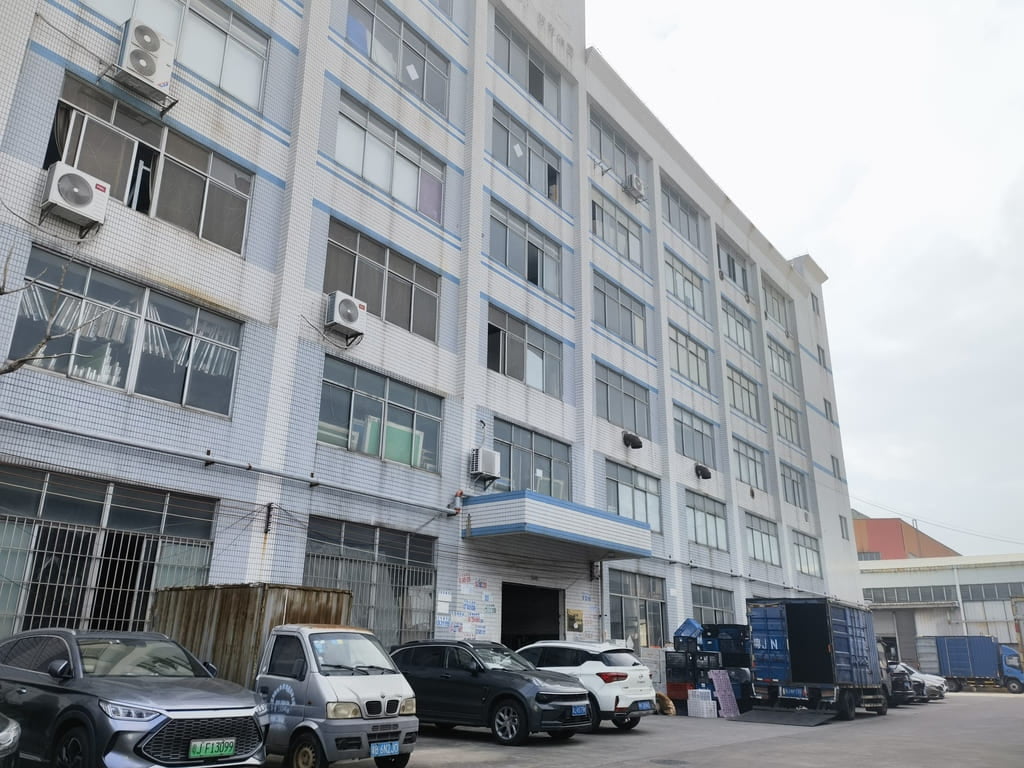
I work near China’s lighting supply-chain area, and I know how much production control changes the final product. A solar street light is made from many parts. If the housing thickness changes, the heat path can change. If the battery batch changes without control, runtime can change. If the wiring and waterproof work are not stable, field risk can increase. If the controller setting is not checked, the lights in the same order may not work in the same way.
I pay close attention to aluminum parts because the lamp body is not just a shell. It supports structure, heat dissipation, and outdoor durability. My in-house aluminum die-casting capability helps me control body design, cost, and consistency better than relying only on outside supply. I still need quality checks, but I can react faster when the structure or mold detail needs improvement.
| Bulk order control point | I check this in production |
|---|---|
| Incoming materials | I check key parts before assembly |
| Aluminum housing | I check structure, surface, and fit |
| LED module assembly | I check mounting and heat contact |
| Battery and controller | I check specification and connection |
| Waterproof treatment | I check sealing and cable points |
| Working mode setting | I check lighting program before packing |
| Final inspection | I check function, appearance, and order match |
What should wholesalers and EPC buyers focus on?
I suggest that buyers do not judge the supplier only by the sample. A sample is important, but a bulk order is where the real risk appears. I ask how the manufacturer controls incoming materials, assembly, aging, packaging, and order records. I ask whether the same configuration will be used in mass production. I also ask how the supplier handles changes when one component becomes unavailable. A reliable manufacturer should not change key parts without clear communication.
Are the warranty and performance promises realistic?
I get concerned when a quotation promises everything at a very low price. A long warranty is useful only when the configuration and responsibility are realistic.
I choose a manufacturer whose warranty terms match the product design, working environment, component quality, and real service ability, not only the words on the quotation.
How should I read warranty claims?
I read a warranty as a business promise and a technical promise at the same time. A long warranty can be good, but I need to check what it covers. I ask whether the warranty covers the battery, solar panel, LED module, controller, and housing. I ask how the supplier handles failed parts. I ask what evidence is needed. I ask whether the warranty depends on correct installation and correct use conditions.
I do not reject strong warranty terms. I only check if the terms match the product. [If a solar street light has a very low-cost battery and a very long warranty claim, I ask more questions. If a very high wattage is promised with a small panel and small battery, I question the runtime. If a supplier says the light works well in every country, I ask for the actual design condition. Real projects always have limits.
| Promise I see | Question I ask |
|---|---|
| Very high wattage | I ask for real LED power and lighting mode |
| Very long runtime | I ask for battery capacity and dimming plan |
| Very long warranty | I ask what parts are covered |
| Very low price | I ask what configuration was reduced |
| Works in many climates | I ask which climate was used for design |
| Large battery claim | I ask for battery type and practical use logic |
How do I test whether the promise is practical?
I compare the promise with the configuration. I look at the panel, battery, LED power, and working schedule as one set. If the supplier can explain the balance, I continue the discussion. If the supplier only repeats “good quality” or “no problem,” I slow down. I also check whether the warranty process is clear. For B2B orders, I need a supplier who can help me solve problems in a commercial way. I cannot rely on slogans when my customer is waiting for project delivery.
Does the manufacturer understand B2B project and OEM needs?
I see many buyers struggle when a product is fine, but the supplier cannot support packaging, branding, delivery planning, or project documents.
I choose a manufacturer who understands wholesale, import, EPC, and OEM communication, because the order is not only about the lamp itself.
Why is B2B support different from retail selling?
I work mainly with wholesalers, importers, EPC contractors, project developers, and municipal project suppliers. These customers need more than a product link. They need stable models, clear specifications, low MOQ flexibility, branding support, packing control, and communication before deadlines. They also need the supplier to understand how one wrong detail can affect resale, tender delivery, or site installation.
I treat OEM and ODM discussions as technical and commercial work together. The buyer may need a certain housing style, controller mode, logo, color box, carton mark, or product label. The buyer may also need a product that fits a local market price level without damaging basic performance. This balance is not simple. A reliable manufacturer should help the buyer choose where cost can be controlled and where cost should not be cut.
| B2B need | I expect the manufacturer to support |
|---|---|
| Wholesale resale | I expect stable models and repeatable supply |
| Import business | I expect clear packing, documents, and product details |
| EPC project | I expect project-based configuration and delivery planning |
| OEM branding | I expect logo, label, and packaging support |
| ODM development | I expect design discussion and practical engineering input |
| Low MOQ trial order | I expect flexibility without hiding configuration risk |
What experience should I look for?
I look for a manufacturer who has handled overseas communication and understands different market concerns. In Southeast Asia, rain and humidity can be important. In Africa, heat, dust, and long transport can matter. In the Middle East, heat and sunlight conditions need careful material selection. In South America, project buyers may focus on durability and service support. I do not claim one design fits all regions. I prefer a manufacturer who asks the right questions and adjusts the configuration with clear reason.
Conclusion
I choose a reliable solar street light manufacturer by checking questions, system logic, component clarity, production control, warranty realism, and B2B support.
Christina
B2B Sales & Product Expert
10+ years in LED & solar lighting manufacturing. Helping global wholesalers and EPC contractors source reliable OEM/ODM solutions from China.
Looking for a Reliable Lighting Partner?
We support low MOQ and offer customized engineering for commercial, industrial, and solar lighting projects globally. Partner with our Zhongshan/Jiangmen dual factories today.