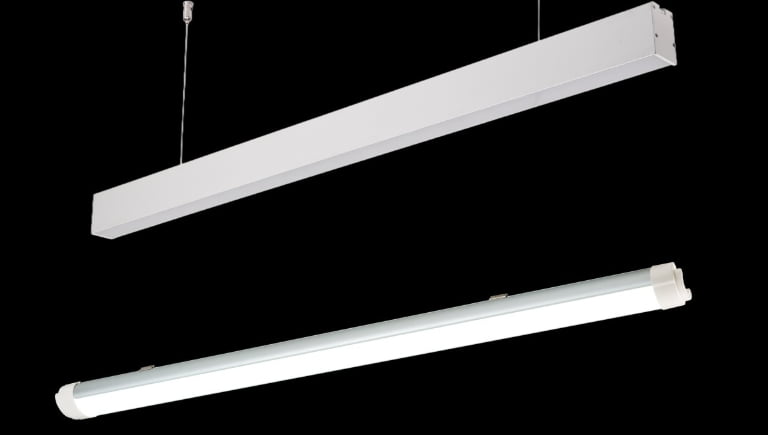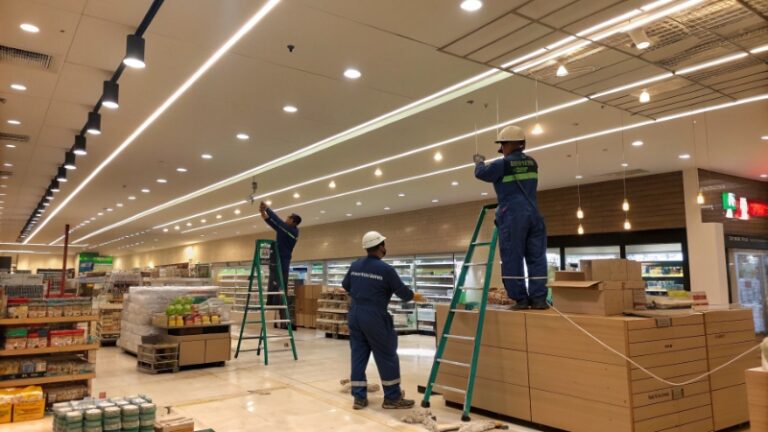
How to Choose a High-Quality LED Linear Light Supplier?
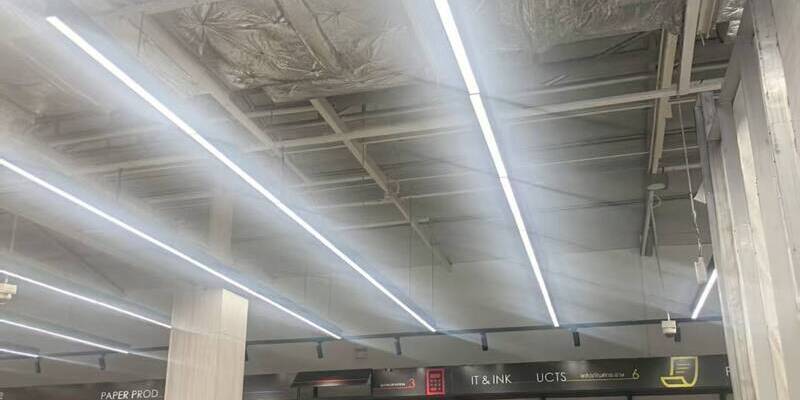
Choosing a reliable LED linear light supplier is the single most consequential decision a wholesaler, importer, or EPC contractor makes—and yet the information you actually need to make that decision is almost never on the quotation in front of you. The real quality gaps between suppliers hide inside the aluminum profile, behind the LED chip binning tier, and deep within the driver's electrolytic capacitors. Get those wrong, and you face the outcome every buyer dreads: mass callbacks after installation.
The best LED linear light supplier is not the one offering the lowest price or the highest wattage claim. It is the one who can demonstrate verifiable thermal management design, transparent chip and driver sourcing, and consistent batch-level quality control. To find that supplier, you need to shift from comparing spec sheets to asking manufacturing-level questions about aluminum extrusion thickness, LED chip bin grading, driver component lifespan, and aging test data.
Below, I will walk you through the exact evaluation framework we use when advising our wholesale and EPC clients. Each section focuses on a specific quality variable—the one that actually separates a dependable fixture from a future warranty claim. By the end, you will have a concrete checklist of questions to ask any supplier before you commit a purchase order.
Why Do Wattage and Price Tell You Almost Nothing About LED Linear Light Quality?
Most buyers start their supplier search by comparing two columns: wattage and unit price. This feels logical—higher watts mean more light, lower price means better margin. But in practice, these two numbers are the least reliable quality indicators in the entire LED linear light category. They are easy to inflate, easy to manipulate, and they tell you nothing about how the fixture will perform 12 or 24 months after installation.
The real quality indicators for LED linear lights are luminous efficacy (lm/W), CRI consistency across production batches, and thermal management design. A fixture rated at 40W could output anywhere from 3,200 lumens to 5,200 lumens depending on chip quality and thermal performance. Always ask for lm/W at operating temperature—not laboratory conditions—before comparing suppliers.
What Should You Ask For Instead?
When I talk to buyers who have been burned by a previous supplier, a common pattern emerges: they chose based on a competitive price per watt, and within a year they started receiving complaints about uneven brightness, color shift, or outright dead LEDs in their installed fixtures. The root cause was almost never a defective individual unit—it was a systemic material choice that made failure inevitable.
Here is what to request instead of a simple quotation:
| What Most Buyers Ask For | What You Should Ask For Instead |
|---|---|
| Wattage (W) | Luminous efficacy (lm/W) at steady-state temperature |
| Unit price | Cost breakdown by component tier (chip, driver, housing) |
| CRI value (single number) | CRI bin consistency across recent production batches |
| IP rating | Sealing method or potting process details |
| "Brand name" LED chip | Specific chip series, bin code, and sourcing channel |
The difference matters enormously. Two suppliers can both quote you a "50W, CRI>80, IP65 LED linear light." One uses properly binned chips from a tier-one manufacturer's authorized channel, a driver with 105°C-rated capacitors, and an aluminum profile with adequate fin structure. The other uses off-bin chips purchased on the secondary market, a budget driver with 85°C capacitors, and a thin-wall extrusion that saves material cost. On paper, they look identical. In the field, they will perform very differently.
> A practical tip: Ask your supplier to provide an LM-80 report for the specific LED chip series used in your order—not a generic brand-level report. If they cannot produce it, that itself is an answer.
The real question is never "why is Supplier B 30% more expensive than Supplier A?" The real question is: "What is Supplier A leaving out that Supplier B is including?" Learning to decode that gap is the core skill in LED linear light procurement.
How Does Aluminum Extrusion Quality Affect LED Linear Light Lifespan?
The aluminum extrusion profile of an LED linear light is where the most aggressive cost-cutting happens—and where it does the most long-term damage. It is invisible once the fixture is installed, difficult to evaluate from a product photo, and rarely discussed in supplier marketing materials. But it is the single biggest factor controlling the junction temperature of your LEDs, which directly determines lumen maintenance and lifespan.
Aluminum extrusion wall thickness and internal fin structure directly control how efficiently heat moves away from LED chips. Thinner walls and simplified fin designs save material cost but cause higher junction temperatures, which accelerate lumen depreciation. In our aging tests, we consistently observe meaningful temperature rise differences between properly engineered profiles and thin-wall budget profiles running identical LED boards—differences that compound into visible lumen loss within the first year.
Why Is This Where Hidden Cost-Cutting Lives?
Aluminum is one of the most significant material costs in an LED linear light. A supplier looking to lower their quotation price can reduce wall thickness, simplify or eliminate internal heat-dissipation fins, or switch from a 6063-T5 alloy extrusion to a lower-grade material. None of these changes will be obvious from a product photograph or a spec sheet. The fixture will look the same, feel lighter (which some buyers even mistake for better engineering), and perform identically for the first few weeks.
The problem reveals itself over months. Here is the mechanism:
- Thinner walls = reduced thermal mass and conductive surface area. The aluminum cannot absorb and spread heat fast enough.
- Higher junction temperature at the LED chip. Every 10°C increase roughly halves the theoretical lifespan of the LED.
- Accelerated lumen depreciation. The fixture gets progressively dimmer. By month 12–18, end clients start noticing.
- Phosphor degradation and color shift. Higher operating temperatures cause the phosphor layer on LED chips to degrade unevenly, producing noticeable color inconsistency across a row of installed fixtures.
How Can You Evaluate This Without Visiting the Factory?
You cannot fully assess extrusion quality remotely, but you can narrow the field significantly:
- Request a cross-section drawing or photograph of the extrusion profile. A supplier confident in their thermal design will share this. One cutting corners likely will not.
- Ask for the wall thickness specification. There is no universal "right" number—it depends on wattage and fixture length—but asking the question separates informed buyers from passive ones.
- Request a sample and weigh it. Compare the weight against the competitor's sample of the same length. Significantly lighter weight at the same dimensions is a clear signal.
- Ask if the supplier owns or controls their extrusion or die-casting process. In our case, we operate our own aluminum die-casting workshop, which gives us direct control over material quality and tooling precision. Suppliers who outsource this step have less visibility into what they are actually receiving.
> From our production floor: When we run side-by-side aging tests with identical LED boards mounted on different extrusion profiles, the temperature rise gap between a well-designed profile and a budget profile is not marginal—it is substantial enough to push the cheaper profile's junction temperature into a range where accelerated depreciation becomes predictable. This is not abstract theory. It is something we measure and something that shows up in the field as warranty claims.
Why Does LED Chip and Driver Selection Determine Your 3-Year Total Cost?
If aluminum extrusion is where cost-cutting hides, LED chip and driver selection is where it compounds. Two LED linear lights with identical quoted specifications can differ 30–50% in price, and that gap maps almost entirely to three variables: chip tier, driver component quality, and assembly process rigor. Understanding this cost anatomy transforms the buyer's question from "why is your price higher?" to "what does the cheaper option actually contain?"
The LED chip determines initial light output and long-term lumen maintenance. The driver determines electrical reliability and surge tolerance. Together, they account for the majority of a LED linear light's bill of materials—and they are the primary source of field failures. A properly specified chip-and-driver combination costs more upfront but dramatically reduces your 3-year total cost by eliminating callbacks, replacements, and reputation damage.
Understanding Chip Tier and Binning
Not all chips from the same brand are equal. Major LED chip manufacturers produce chips across a wide performance spectrum. The highest-performing bins—with tight color temperature tolerance, high luminous efficacy, and verified LM-80 data—go to authorized distributors and premium customers. Lower-performing bins, off-spec lots, and chips that did not meet the top-tier criteria are sold through secondary channels at significantly lower prices.
Here is how this affects you as a buyer:
| Factor | Tier-1 Binned Chip | Off-Bin / Secondary Market Chip |
|---|---|---|
| Color temperature consistency | Tight bin (e.g., ±100K across batch) | Wide variation (±300K or more possible) |
| Luminous efficacy | Meets published datasheet values | Lower than published, sometimes significantly |
| LM-80 data availability | Available for exact bin code | May not exist for the specific lot |
| Long-term lumen maintenance | Predictable and warranted | Unpredictable; faster depreciation common |
| Price | Higher | Substantially lower |
A common pattern we see in post-sale complaints is this: a buyer installs several hundred LED linear lights across a commercial project. Within six months, some fixtures are noticeably dimmer than others, and a few show visible color shift. The root cause is not a manufacturing defect in the traditional sense—it is that the supplier used chips from inconsistent bins, and some chips were operating outside their optimal parameters from day one.
What About Driver Quality?
The driver is the most failure-prone component in any LED fixture. Most driver failures trace back to one component: the electrolytic capacitor. Capacitor lifespan is rated at a specific temperature—commonly 85°C or 105°C. The difference matters enormously:
- An 85°C-rated capacitor in a fixture that runs at 70°C ambient inside the driver housing may last 15,000–20,000 hours.
- A 105°C-rated capacitor in the same conditions can last 40,000–60,000 hours or more.
That is the difference between a driver that fails in under 2 years and one that runs for 5+ years. And since a driver failure means a completely dead fixture—not a dimmer one—it is the most visible, most embarrassing kind of failure for a wholesaler or contractor to explain to their end client.
Questions to Ask Your Supplier
- What specific LED chip series and bin code are you using for this order?
- Can you provide the LM-80 report for that exact chip series?
- What brand and model is the LED driver? What is the rated capacitor temperature?
- If I order again in six months, will you guarantee the same chip bin and driver model?
That last question is crucial. Batch consistency is one of the hardest things to maintain in LED manufacturing, and a supplier's answer reveals their procurement discipline and inventory management approach.
How Do You Verify LED Linear Light Quality Before Placing a Bulk Order?
Every quality discussion eventually arrives at this practical question: how do you actually verify what a supplier claims before you commit to a purchase order of hundreds or thousands of units? Visiting every factory is impractical for most importers and contractors. But remote verification is possible if you know what to ask for and how to interpret the responses.
To verify LED linear light quality remotely, request pre-production samples with full documentation—including cross-section photos of the extrusion, chip bin code and LM-80 data, driver specifications with capacitor ratings, and aging test results. A trustworthy supplier will provide these without hesitation. Resistance to documentation requests is itself a quality signal that should inform your decision.
A Practical Verification Checklist
Here is the step-by-step approach I recommend to our clients—and it is the same process we welcome when buyers evaluate us:
Step 1: Request a Detailed BOM (Bill of Materials)
Not a marketing spec sheet. A real BOM that lists:
- Aluminum extrusion alloy type and wall thickness
- LED chip manufacturer, series, and bin
- Driver brand, model, and capacitor temperature rating
- Lens/diffuser material and light transmission rate
- Sealing materials or potting compounds used
Any supplier with genuine quality control can produce this. If they tell you it is "proprietary" or "confidential," that is a red flag. You are not asking for their tooling drawings—you are asking what materials are going into the product you are paying for.
Step 2: Order Pre-Production Samples
Do not evaluate from photographs. Order physical samples and conduct your own basic checks:
- Weigh the fixture. Compare against competitors and against the supplier's own claimed dimensions.
- Examine the extrusion cross-section. Cut or request a cross-section sample to see wall thickness and fin structure firsthand.
- Power it on and measure. Use a basic lux meter and power meter to verify that actual power draw and light output are in the expected range.
- Run a thermal test. Leave the fixture powered on for 2–3 hours in a stable ambient environment and measure the housing surface temperature. Excessive heat indicates poor thermal design.
Step 3: Ask for Aging Test Data
Reputable LED linear light manufacturers conduct aging tests—running fixtures continuously at rated power for extended periods and measuring lumen output and temperature at intervals. We perform these tests as part of our standard quality control process. Ask to see:
- Temperature rise curves (housing and, if available, junction estimates)
- Lumen maintenance measurements over the test period
- Photographs of the test setup showing quantity and conditions
If a supplier cannot show any aging test data, you are essentially being asked to trust their word. That may be a reasonable risk for a small trial order, but not for a project-scale commitment.
Step 4: Evaluate Communication Quality
This is subjective but important. A supplier who can discuss thermal design, chip binning, and driver component selection with technical fluency is demonstrating manufacturing-level knowledge. One who only talks about price, delivery time, and certification logos is likely a trading company reselling someone else's product—and they cannot help you troubleshoot when problems arise.
> A pattern we see repeatedly: Buyers who experience batch failures almost always report that their supplier communication was purely commercial—price negotiation and logistics—with no technical substance. The suppliers who help you avoid problems are the ones who talk about problems openly before you order.
What Is the Real Risk of Choosing the Wrong LED Linear Light Supplier?
Many buyers frame the supplier decision as a cost optimization problem: "How do I get the best price for acceptable quality?" But the experienced buyers I work with—the ones who have been through a batch failure—frame it differently: "How do I make sure I never face mass callbacks that destroy my credibility with my end client?"
The real risk of choosing the wrong LED linear light supplier is not overpaying by 10–20%. It is batch-level failure after installation—widespread lumen depreciation, color shift, or dead LEDs across a project—that forces you to replace fixtures at your own cost and damages your reputation with end clients. This risk is nearly invisible at the point of purchase and fully visible only months later.
How Batch Failure Unfolds
In our experience supporting clients through quality issues—sometimes our own early-stage products, sometimes competitors' fixtures they need us to replace—the pattern is remarkably consistent:
- The initial installation looks fine. All fixtures light up. Color appears uniform. Everyone is satisfied.
- Month 3–6: Early signs. A small percentage of fixtures dim noticeably or show color temperature drift. End clients may not complain yet, but the variation is measurable.
- Month 8–14: Visible failure. Dead LEDs appear (dark spots along the strip). More units show significant dimming. End clients begin complaining or withholding payment on the project.
- Month 12–18: Systemic failure. The buyer realizes this is not a random defect but a batch-wide problem. Replacement cost, labor cost, and reputation damage are now all their responsibility.
The financial math is brutal. Replacing fixtures after installation costs 3–5x the original fixture price when you factor in labor, logistics, project disruption, and the replacement fixtures themselves. A buyer who "saved" 20% on unit cost by choosing a budget supplier can easily lose 100% of their project margin on a single batch failure.
Who Bears the Risk
Christina
B2B Sales & Product Expert
10+ years in LED & solar lighting manufacturing. Helping global wholesalers and EPC contractors source reliable OEM/ODM solutions from China.
Looking for a Reliable Lighting Partner?
We support low MOQ and offer customized engineering for commercial, industrial, and solar lighting projects globally. Partner with our Zhongshan/Jiangmen dual factories today.