
What Is LED Flood Light and How Is It Used in Real Projects?
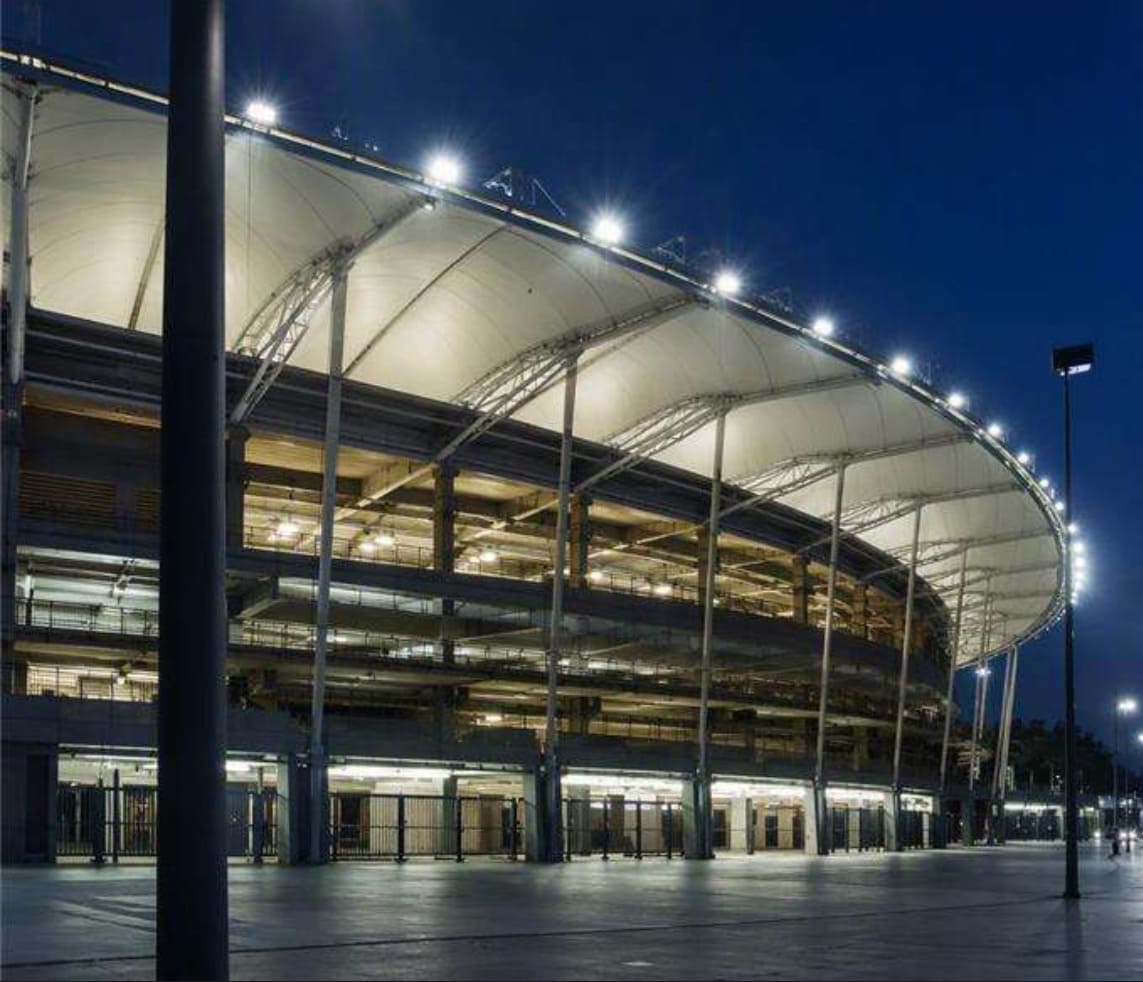
What is an LED Flood Light?
An LED flood light is a robust, high-lumen output fixture that utilizes LEDs to cast a wide, uniform beam of light over a large area. LED flood lights are engineered for broad coverage, making them ideal for illuminating large outdoor or indoor spaces.
Key Characteristics:
- High Lumen Output: Designed to produce a significant amount of light, often thousands or tens of thousands of lumens, to effectively illuminate vast areas.
- Wide Beam Angle: Typically features beam angles ranging from 60 to 120 degrees or more, providing broad coverage rather than focused illumination.
- Energy Efficiency: LEDs consume significantly less power than traditional metal halide or high-pressure sodium floodlights, leading to substantial energy savings and lower operating costs, gaining long-term ROI.
- Long Lifespan: With lifespans often exceeding 50,000 hours, LED flood lights drastically reduce maintenance and replacement costs, a major benefit for large-scale installations.
- Durability: Constructed with rugged materials, they are built to withstand harsh outdoor conditions, including extreme temperatures, moisture, and impact.
- Instant On/Off: LED flood lights provide instant full brightness, which is crucial for safety and operational responsiveness.
- Color Rendering Index (CRI): Modern LED flood lights offer excellent CRI, typically 70-80+, meaning they render colors more accurately, which is important for security monitoring and visual clarity.
How Is an LED Flood Light Applied in Real Project?
In real-world projects, an LED flood light is applied by carefully considering factors such as mounting height, the size and nature of the target area, the required illuminance levels (lux), appropriate beam angles to ensure uniform light distribution, and the specific operational requirements of the application, such as security, sports, or industrial work.
On large-scale projects, a powerful LED flood light isn't enough; its strategic deployment is paramount. Here are the key factors:
- Mounting Height: This is fundamental. Higher mounting heights typically require fixtures with greater lumen output and often narrower beam angles to project light effectively over longer distances without excessive spread. Conversely, lower heights might use wider beams and lower lumens.
- Example: A parking lot might use 20-30 ft poles, while a stadium could utilize 100+ ft high masts.
- Target Area: The size and shape of the area to be illuminated dictate the number of fixtures, their placement, and beam angle selection. A long, narrow corridor needs a different approach than a wide, open square. We need to think about the "coverage footprint" of each LED flood light.
- Required Illuminance (Lux Levels): Different applications have specific lighting standards and recommendations for minimum lux levels. For instance, a warehouse loading dock will require higher lux than a general storage area, and a professional sports field will demand very high, uniform lux levels. This is often governed by industry standards.
- Table: Example Recommended Lux Levels (General Guidance)
| Application | Recommended Lux Level (Average) |
|---|---|
| General Outdoor Pathways | 10-20 lux |
| Parking Lots | 20-50 lux |
| Loading Docks / Work Areas | 100-200 lux |
| Sports Fields (Amateur) | 200-300 lux |
| Sports Fields (Professional) | 500-1000 lux (or more) |
| Building Facade Lighting | 50-100 lux (aesthetic) |
- Beam Angle: The beam angle is critical for light distribution. A narrow beam projects light further and more intensely, suitable for high-mast applications or emphasizing architectural features. A wide beam provides broader, more diffuse coverage for general area lighting like parking lots. Achieving optimal uniformity often involves a combination of different beam angles and strategic aiming.
- Lighting Uniformity: This refers to how evenly light is distributed across the target area. Poor uniformity can create dark spots and bright spots, leading to visual discomfort and safety hazards. High uniformity is essential for sports fields, large work areas, and security applications.
- Application-Specific Requirements:
- Security: Requires consistent, bright light with good color rendering to aid surveillance cameras.
- Sports: Demands high illuminance, excellent uniformity, minimal glare for players and spectators, and often specific color temperatures.
- Industrial: Needs durable fixtures that can withstand dust, moisture, and vibrations, providing adequate light for complex tasks. An LED flood light used in an industrial setting must often meet specific IP ratings.
- Architectural: Focuses on highlighting specific features, requiring precise beam control and often dynamic color capabilities.
How Do You Choose the Right LED Flood Light for Your Project?
The key is to select a fixture based on your required lumen output, which is determined by the mounting height and target area, rather than simply choosing by wattage. Consider the beam angle and IP rating to match the application's environmental conditions.
Choosing the right fixture is a technical process. While a professional lighting design is always recommended for large-scale projects, understanding the core components of selection will empower you to make better procurement decisions.
H1: Project LED Flood Light Selection Table
Based on my experience, most applications can be categorized by their mounting height. Here’s a simplified table to guide your initial focus.
| Mounting Height | Key Requirement | Recommended Focus |
|---|---|---|
| 3–5 meters | General area coverage, security | Lower lumens (5,000–15,000 lm), wide beam angle (120°), durability |
| 6–9 meters | Parking lots, medium-sized yards | Medium lumens (15,000–30,000 lm), medium to wide beam angles (90°-120°) |
| 10–15 meters | Large industrial areas, small sports fields | High lumens (30,000–60,000 lm), mixed beam angles for uniformity |
| 15+ meters | Stadiums, ports, large construction sites | Very high lumens (60,000–200,000+ lm), specific narrow/asymmetric beams |
H2: LED Flood Light Wattage and Lumens Guide
A common mistake is choosing a fixture based on wattage alone. Wattage measures energy consumption, not light output. The most important metric is lumens (lm), which measures the total amount of visible light emitted. A more efficient LED flood light will produce more lumens per watt (lm/W).
When planning, work backward:
- Coverage Area & Mounting Height → Determines the required lumens.
- Required Lumens → Determines the fixture's lumen package.
- Lumen Package & Efficiency → Determines the wattage.
Here's a general guide:
| Wattage Range | Typical Lumen Output | Common Mounting Height | Ideal Application |
|---|---|---|---|
| 30W–50W | 3,500–6,500 lm | 3–5 m | Patios, yards, building entrances |
| 80W–150W | 10,000–21,000 lm | 6–9 m | Parking lots, roadways, building facades |
| 200W–300W | 26,000–42,000 lm | 8–12 m | Industrial yards, small sports courts, loading docks |
| 400W–600W | 52,000–84,000 lm | 12–20 m | Large area lighting, recreational sports fields |
| 800W–1200W+ | 110,000–180,000+ lm | 20m+ | Professional stadiums, ports, airports |
H3: LED Flood Light Beam Angle Guide
The beam angle is crucial for efficiency and visual comfort. Using the wrong one wastes light and can create glare.
- Narrow Beams (10°-45°): These are best for long-distance projection. Think of them like a rifle. They are used for lighting tall structures, flagpoles, or illuminating specific areas from a high mounting point.
- Medium Beams (60°-90°): A versatile option that balances intensity and coverage. Commonly used for general area lighting and large building facades where you need a strong punch of light.
- Wide Beams (100°-150°): These are best for maximum coverage from lower mounting heights. Think of them like a shotgun. They create soft, even light, ideal for parking lots, construction sites, and general security lighting.
H4: IP65 vs. IP66 for Your LED Flood Light
The IP (Ingress Protection) rating indicates a fixture's resistance to solids (like dust) and liquids (like water). For any outdoor LED flood light, a rating of IP65 is the minimum standard.
- IP65: The fixture is completely dust-tight and can withstand low-pressure water jets from any direction. This is suitable for most general outdoor applications where the fixture is exposed to rain.
- IP66: The fixture is also dust-tight but can withstand powerful water jets. This rating is recommended for environments with extreme weather, coastal areas with salt spray, or facilities where high-pressure hosing is used for cleaning, such as food processing plants or industrial wash-down areas.
All our commercial and industrial flood lights are rated at least IP65, with many models offering IP66 for more demanding projects.
LED Flood Light vs. LED Spotlight?
The primary difference between an LED flood light and an LED spotlight lies in their beam angle and intended application. An LED flood light produces a wide, broad beam of light (typically 60-120 degrees or more) to illuminate large general areas. In contrast, an LED spotlight emits a narrow, focused beam (typically 10-45 degrees) designed to highlight specific objects or features with high intensity.
| Feature | LED Flood Light | LED Spotlight |
|---|---|---|
| Beam Angle | Wide (60° - 120°+) | Narrow (10° - 45° typically) |
| Light Distribution | Diffuse, uniform coverage over large areas | Concentrated, intense light on a small, specific area |
| Intensity | Lower intensity per unit area, spread broadly | High intensity per unit area, focused |
| Throw Distance | Designed for broad coverage, not maximum throw | Optimized for maximum throw distance and precise targeting |
| Purpose | General illumination, safety, security over large zones | Accent lighting, task lighting, highlighting specific objects or architectural features |
| Typical Applications | Parking lots, sports fields, building facades (wash), Landscape features, industrial yards, construction sites | Statues, signage, stage lighting, high-ceiling retail displays, architectural uplighting |
| Effect | Reduces shadows, creates a bright and evenly lit environment | Creates dramatic shadows, emphasizes textures, draws attention to a focal point |
| Number Needed | Fewer fixtures might be needed to cover a large area, but often spaced to ensure uniformity. | Many fixtures might be needed to light multiple focal points, or one per feature. |
| Energy Usage | Can be high in total wattage for very large areas, but efficient for the coverage provided. | Lower wattage per fixture, but specific application might require many. |
When to Choose an LED Flood Light:
- When the goal is to illuminate an entire area broadly and evenly, such as a large outdoor space for safety and general visibility.
- When minimizing shadows across a wide zone is important.
- For applications like general parking lot lighting, stadium general illumination, or washing a building exterior with light.
- If you need to provide sufficient light for security cameras across an expansive property.
LED Flood Lights for Stadiums?
LED flood lights are chosen for stadiums due to their exceptional brightness, precise beam control for uniform illumination across playing surfaces, superior energy efficiency, instant on/off capability, and long lifespan, which collectively reduce operational costs, enhance visual quality for players and broadcasts, and meet stringent sports lighting standards.
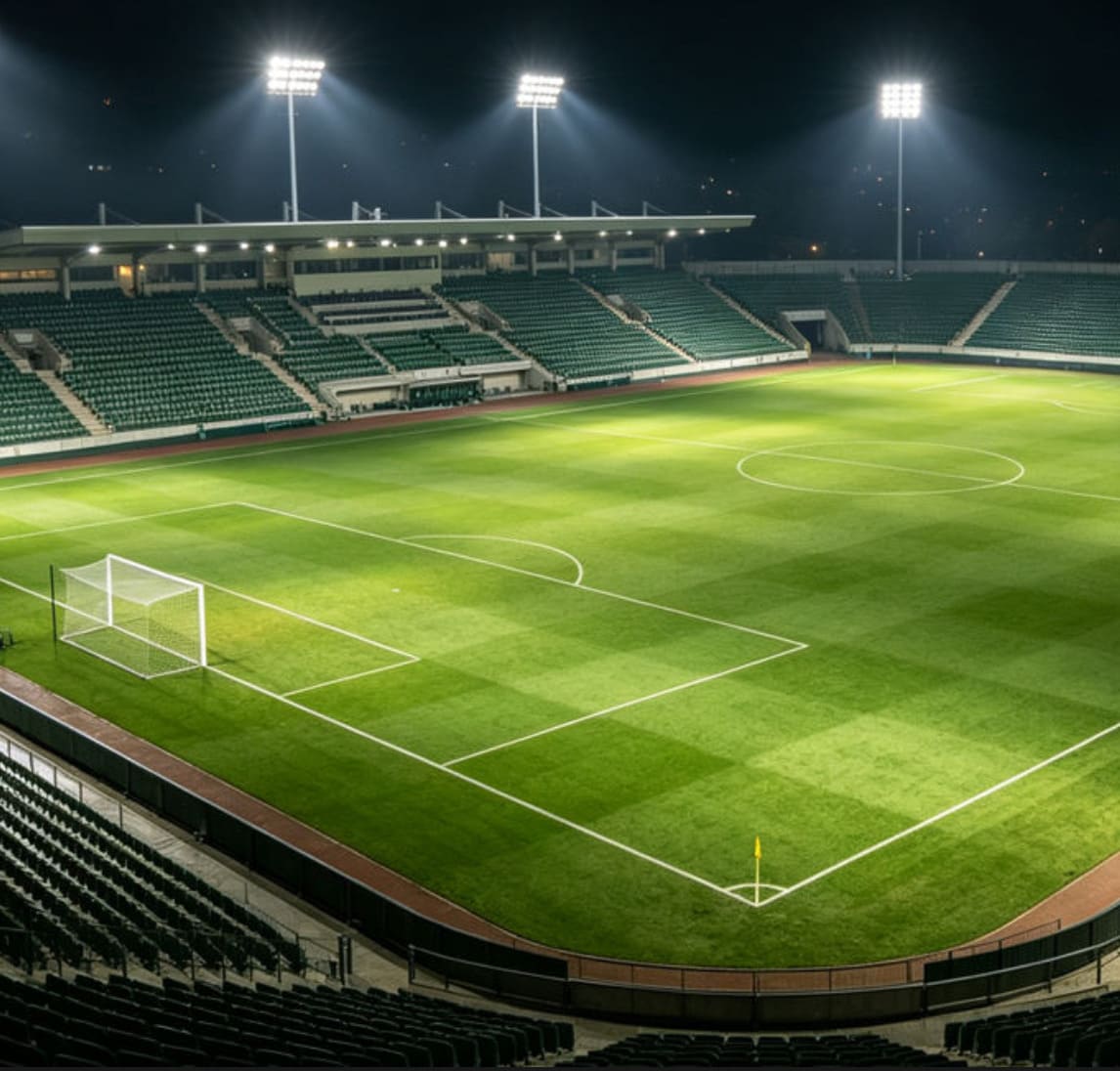
Illuminating a stadium with an LED flood light is a highly specialized task. It’s not just about making things bright; it’s about providing high-quality, consistent light that supports peak athletic performance, spectator comfort, and increasingly, high-definition television broadcasts.
LED flood lights are indispensable for stadium applications:
- Exceptional Lumen Output and Efficacy: Stadiums require extremely high lux levels (often 500-1000+ lux for professional play, even higher for HDTV broadcasting).
- Precise Beam Control and Optical Design: Stadium lighting requires very narrow, highly controlled beam angles (often 10-30 degrees) to project light from high masts (often 100-200 feet tall)
- Superior Uniformity
- Reduced Glare
- Instant On/Off and Dimming Capabilities
- Long Lifespan and Reduced Maintenance
- Excellent Color Rendering Index (CRI)
- Flicker-Free Operation: High-quality LED drivers in LED flood light systems ensure flicker-free operation, allowing for clear slow-motion replays.
- Durability and Environmental Resilience
LED Flood Lights for Parking Lot?
LED flood lights are highly ideal for parking lots due to their ability to provide broad, uniform illumination over large areas, enhancing safety and security while significantly reducing energy consumption and maintenance costs. Their robust construction and precise light distribution capabilities make them a cost-effective and efficient solution for diverse parking lot configurations.
-
Enhanced Safety and Security
-
Visibility: Bright, uniform light helps drivers and pedestrians clearly see obstacles, other vehicles, and changes in the terrain.
-
Deterrence: Well-lit areas are a proven deterrent to criminal activity, making a parking lot safer for individuals and vehicles.
-
Surveillance: For parking lots equipped with security cameras, an LED flood light with good color rendering improves image clarity and identification.
-
Energy Efficiency and Cost Savings
-
Reduced Operating Costs: Replacing traditional HID fixtures with an LED flood light can slash energy consumption by 50-70% or more.
-
Lower Maintenance: With lifespans exceeding 50,000 hours, LED flood lights drastically reduce the need for frequent changes, especially crucial for fixtures mounted on tall poles where lift equipment is required. This cuts down on labor and material costs.
-
Optimal Light Distribution and Uniformity
-
Wide Beam Angles: Parking lots benefit from an LED flood light with wide beam angles (e.g., 90-120 degrees) to cover expansive areas efficiently from typical pole heights (e.g., 20-30 feet).
-
Uniformity: Good light uniformity prevents dark spots that can harbor crime or create visual discomfort. Strategic placement and overlapping light patterns ensure consistent illumination across the entire lot.
-
Reduced Glare: Proper fixture selection and aiming, can minimize glare that might bother drivers or adjacent properties.
-
Durability and Environmental Resilience
-
Robust Construction: Parking lot lights are exposed to harsh outdoor elements. An LED flood light designed for this application typically features a rugged die-cast aluminum housing and an IP65 or IP66 rating to withstand rain, snow, dust, and temperature fluctuations.
-
Vibration Resistance: LEDs are solid-state devices and are highly resistant to vibration from traffic or wind, further contributing to their longevity.
-
Smart Control Integration:
-
Dimming and Motion Sensors: Many modern LED flood light systems for parking lots can be integrated with smart controls, allowing for dimming during off-peak hours or motion-activated brightness, further optimizing energy usage and extending lifespan.
-
Photocells: Automatic dusk-to-dawn operation ensures lights are only on when needed.
LED Flood Lights for Warehouse?
LED flood lights can be used effectively in warehouses, particularly in areas requiring broad, powerful illumination over large open spaces, such as storage areas, loading docks, or staging zones. Their high lumen output and wide beam angles can supplement or, in specific layouts, even serve as primary general lighting, contributing to enhanced visibility, safety, and energy efficiency.
When designing warehouse lighting, the primary goals are safety, productivity, and energy efficiency. While LED high bays are typically designed for very high ceilings and focused light down aisles, an LED flood light offers distinct advantages in specific warehouse scenarios that traditional high bays might not address as effectively.
-
Open Storage Areas and Staging Zones:
-
Many warehouses have large, open areas where goods are temporarily stored or prepared for shipment. These zones benefit from broad, uniform illumination rather than narrow aisle-specific lighting. An LED flood light with a wide beam angle is perfectly suited to provide this general area lighting, reducing shadows and improving overall visibility.
-
Loading Docks:
-
Loading docks require very bright and consistent lighting to ensure the safe and efficient movement of goods and personnel, especially during night operations. An LED flood light can be mounted to illuminate the interior of trailers, the dock plate, and the immediate surrounding area, preventing accidents and aiding in accurate freight handling.
-
The robust nature of an LED flood light, often with high IP ratings, also makes it suitable for semi-exposed loading docks where weather might be a factor.
-
Perimeter and Wall Washing:
-
Some warehouse designs benefit from illuminating the perimeter or washing light across large interior walls to improve ambient light levels and reduce the "cave effect" often associated with dark, unlit walls. An LED flood light can be angled to achieve this, making the space feel more open and less confined.
-
Supplementing High Bays:
-
In warehouses with extremely high ceilings or complex layouts, an LED flood light can act as a powerful supplementary light source. For instance, if high bays create shadows under mezzanines or in odd corners, a flood light can fill these gaps.
LED Flood Lights for Construction Site?
LED flood lights are essential for construction sites due to their extreme durability, high lumen output for illuminating vast work areas, energy efficiency, portability, and instant-on capabilities. These features collectively ensure worker safety, enhance productivity during night shifts, and withstand the harsh, dynamic conditions typical of a construction environment.
Lighting on a construction Is a fundamental safety requirement and a driver of productivity. The environments are often dusty, muddy, wet, and subject to constant movement and potential impact.
-
Extreme Durability and Robustness:
-
Impact Resistance: Construction sites are prone to accidents. An LED flood light is typically constructed with heavy-duty die-cast aluminum housings and tempered glass lenses, making them far more resilient to drops, impacts, and vibrations than traditional fragile lamps.
-
Weather Resistance: With high IP ratings (IP65 or IP66), LED flood lights are designed to withstand rain, snow, dust, and extreme temperatures (both hot and cold), ensuring reliable operation in all weather conditions.
-
High Lumen Output and Wide Coverage:
-
Construction activities, whether excavation, concrete pouring, or framework assembly, require bright, uniform light over large, often uneven, areas. An LED flood light provides the necessary high lumen output and wide beam angles to illuminate expansive zones, eliminating dark spots and improving visibility for complex tasks.
-
This is critical for detailed work and for allowing operators of heavy machinery to see clearly.
-
Enhanced Safety:
-
Reduced Heat Output: Traditional floodlights generate significant heat, posing burn risks and fire hazards, especially in enclosed spaces or near flammable materials. LEDs run cooler, enhancing site safety.
-
Improved Visibility: Clear, bright light reduces the risk of trips, falls, and other accidents, particularly during night shifts or in dimly lit interior spaces.
-
Better Color Rendering: High CRI LEDs allow workers to distinguish colors more accurately, which is important for identifying wires, safety markings, or equipment.
-
Long Lifespan and Reliability:
-
The extended lifespan of an LED flood light minimizes the need for frequent bulb changes, which can be difficult and dangerous on a busy construction site. This reduces downtime and maintenance costs.
Christina
B2B Sales & Product Expert
10+ years in LED & solar lighting manufacturing. Helping global wholesalers and EPC contractors source reliable OEM/ODM solutions from China.
Looking for a Reliable Lighting Partner?
We support low MOQ and offer customized engineering for commercial, industrial, and solar lighting projects globally. Partner with our Zhongshan/Jiangmen dual factories today.