
What Are the LED Linear High Bay Light Features?
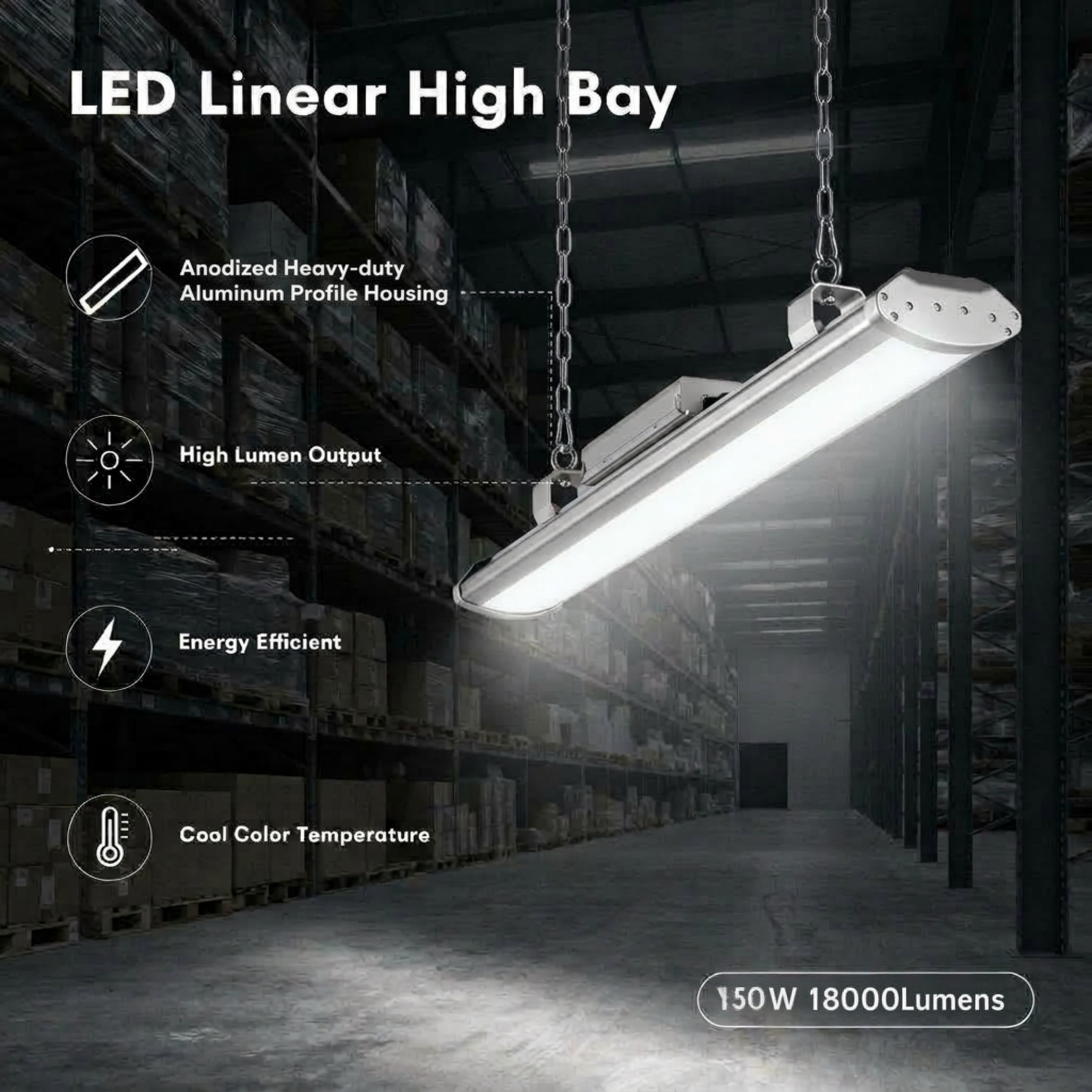
LED linear high bay lights are elongated fixtures designed to deliver uniform illumination across long, narrow spaces such as warehouse aisles, production lines, and racking corridors. Their defining features include a wide, rectangular light distribution pattern, high luminous efficacy (typically 120–140 lm/W), easy maintenance, and robust thermal management through aluminum extrusion housings. These features make them the optimal choice for spaces where even light coverage matters more than concentrated intensity.**
*But here's the thing most product pages won't tell you: every feature on a spec sheet only matters when it matches your specific space geometry and task. In the sections below, I'll break down each core feature and show you exactly when and why* it becomes a selection advantage — so you can make confident procurement decisions rather than guessing by wattage alone.
Why Is Light Distribution the Most Important LED Linear High Bay Feature?
Most buyers start their evaluation by comparing wattage. That's understandable — wattage feels tangible. But in our experience supplying lighting solutions for narrow-aisle warehouses and production facilities, we've seen 200W fixtures outperform 300W alternatives simply because their light distribution matched the space geometry.
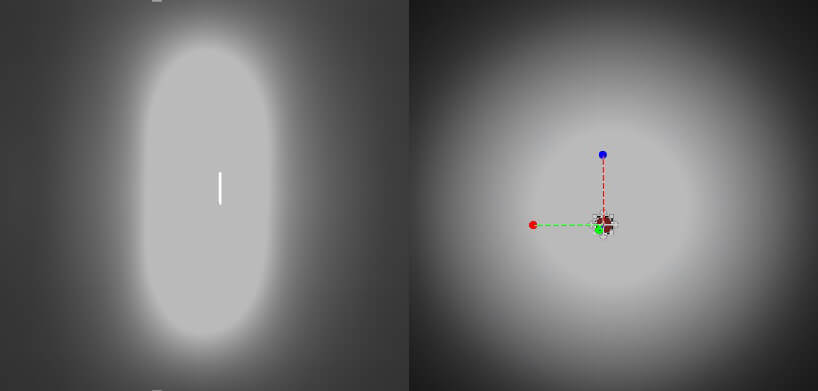
The single most important feature of an LED linear high bay light is its elongated, rectangular beam pattern. Unlike UFO high bays that emit light from a circular point source, linear fixtures spread illumination along their full length, creating even coverage across long corridors without the "hot spots" and dark gaps between fixtures that point sources produce in narrow spaces.
The elongated shape of a linear high bay is not simply an aesthetic choice. It is a functional advantage. Compared to UFO high bay lights, which emit light from a single concentrated point, linear fixtures spread their LED chips across a longer surface. This creates a more rectangular light footprint that naturally aligns with the aisle-and-rack layouts common in warehouses and logistics centers.
In my experience working with warehouse projects across South Asia and the Middle East, switching from point-source UFO fixtures to properly spaced linear high bays reduced the total fixture count by 15–20% while improving uniformity ratios. That is a meaningful cost saving at scale.
How Does Beam Geometry Affect Uniformity?
Think of it this way: a UFO high bay is like a single spotlight shining straight down. It creates a bright circle directly below, with intensity falling off sharply toward the edges. When you mount several UFOs in a line along a narrow aisle, you get alternating bright and dim zones — a scalloping effect.
A linear high bay, by contrast, acts more like a continuous light ribbon. Its beam angle is typically 60° × 120° or similar asymmetric configurations, meaning it throws light wide along the fixture's length (120°) while controlling spill across the narrow dimension (60°). This produces:
- Consistent lux levels from one end of a racking aisle to the other
- Fewer fixtures needed to eliminate dark gaps between mounting points
- Reduced glare for workers operating forklifts or reading labels at height
When Does This Feature Actually Matter?
Not every industrial space benefits from linear distribution. Here's a practical decision framework:
| Space Geometry | Recommended Fixture | Why |
|---|---|---|
| Long, narrow aisles (width < 6m) | Linear High Bay | Rectangular beam matches the corridor shape, minimizing fixtures |
| Open square workshops | UFO High Bay | Circular beam covers equal area in all directions efficiently |
| Production lines (linear workflow) | Linear High Bay | Even illumination along the line reduces inspection errors |
| Large open warehouses (mixed zones) | Combination | Linear over aisles, UFO over open staging areas |
In our factory, we produce both linear and UFO high bays. When a client describes their space, the first question we ask isn't about wattage — it's about the length-to-width ratio of the area they need to light. A 60m-long, 4m-wide racking aisle is a completely different lighting problem from a 30m × 30m open workshop floor.
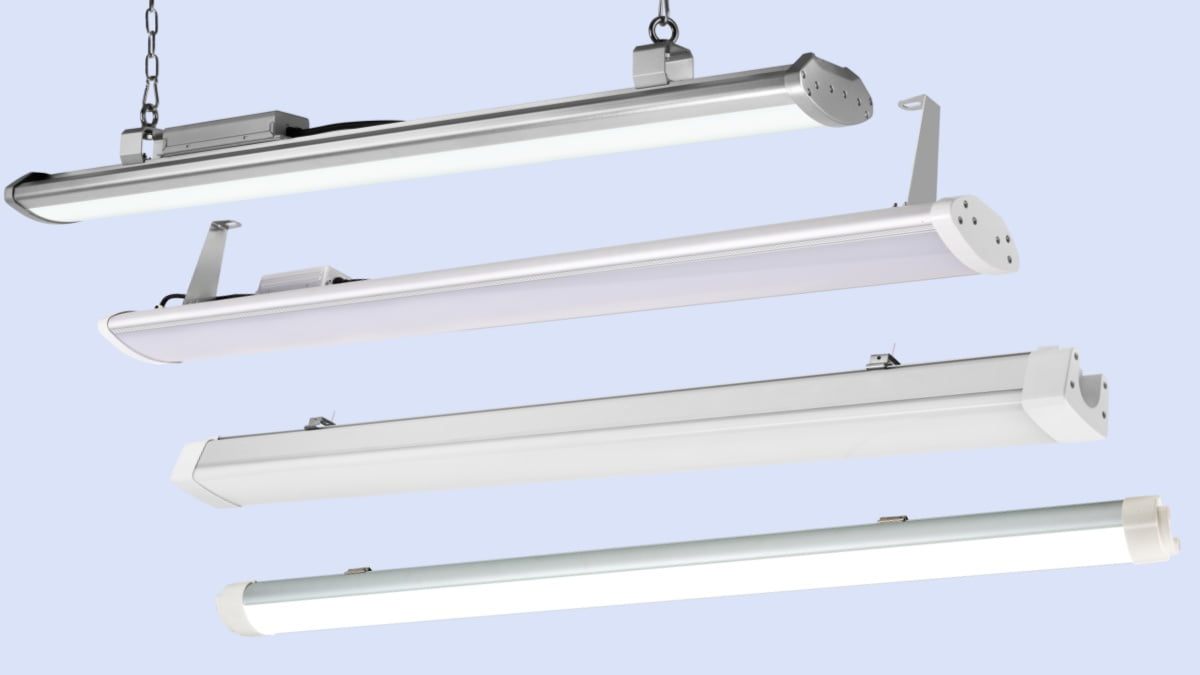
Key takeaway: Light distribution is the defining feature that separates linear from UFO high bays. Evaluate your space geometry first, then select the fixture shape that matches.
How Does Luminous Efficacy Impact Your LED Linear High Bay Selection?
Wattage tells you how much electricity a fixture consumes. But it tells you nothing about how much useful light actually reaches your working plane. This is where many buyers — especially those new to commercial lighting procurement — make costly mistakes. They compare 150W to 200W and assume the higher number is "better." It often isn't.
Luminous efficacy (measured in lumens per watt, or lm/W) is the true efficiency metric for LED linear high bay lights. A 150W fixture with 160 lm/W produces 24,000 lumens — the same output as a 185W fixture with 130 lm/W. The first fixture saves you 35W per unit. Across 100 fixtures running 12 hours a day, that's roughly 15,330 kWh saved per year.
What Efficacy Range Should You Expect?
In our current production, we see LED linear high bay fixtures fall into three general efficacy tiers:
| Efficacy Tier | lm/W Range | Typical Application | Cost Position |
|---|---|---|---|
| Standard | 100–120 lm/W | Budget projects, lower ceiling heights | Lower upfront cost |
| High efficiency | 120–140 lm/W | Most commercial warehouses and factories | Best value balance |
| Premium | 140–160 lm/W | Energy-audited facilities, long operating hours | Higher upfront, fastest ROI |
For most of our wholesale partners and project contractors, the 120–140 lm/W range hits the sweet spot. It allows them to specify fewer fixtures per row (reducing hardware, wiring, and installation labor) while keeping the unit price competitive for emerging market budgets.
Why Efficacy Matters More Than Wattage for Your Bottom Line
When we design a layout for a 10m-high aisle warehouse, we typically start with the target lux level on the floor (usually 200–300 lux for general warehousing, 300–500 lux for inspection areas). Then we work backward:
- Calculate the total lumens needed per square meter at the working plane
- Factor in the maintenance factor (typically 0.7–0.8, accounting for lumen depreciation and dust accumulation over time)
- Divide by the fixture's lumen output to determine how many fixtures are required
- Multiply by the wattage per fixture to get the total electrical load
A higher-efficacy fixture lets you use fewer units or lower wattages to hit the same lux target. This cascades into savings on:
- Electrical infrastructure (fewer circuits, smaller cable cross-sections)
- Mounting hardware (fewer brackets, less structural load)
- Installation labor (fewer fixtures to wire and align)
- Energy bills (lower total wattage over the system lifetime)
Rule of thumb: Every 10 lm/W improvement in efficacy can reduce the number of fixtures by approximately 7–10% for the same lux target, depending on mounting height and spacing.
What Role Do CRI and Color Temperature Play in Linear High Bay Performance?
Color Rendering Index (CRI) and correlated color temperature (CCT) are two specifications that many buyers glance at and move on. But in practice, they directly affect worker safety, inspection accuracy, and visual comfort — three outcomes that facility managers care deeply about.
CRI measures how accurately a light source renders colors compared to natural daylight (on a 0–100 scale). Most LED linear high bay lights ship with CRI 80 (Ra>80), which is adequate for general warehousing. For quality inspection areas, food processing, or textile manufacturing, CRI 90+ fixtures reveal color differences that CRI 70 fixtures simply cannot.
How to Match CRI and CCT to Your Application
Color temperature (measured in Kelvin, K) determines whether the light appears warm (yellowish) or cool (bluish-white). Here's how we typically advise our wholesale partners:
| Application | Recommended CRI | Recommended CCT | Reasoning |
|---|---|---|---|
| General warehousing/logistics | Ra ≥ 80 | 4000K–5000K | Balanced visibility without excessive harshness |
| Manufacturing/assembly | Ra ≥ 80 | 4000K–5000K | Reduces eye fatigue during long shifts |
| Quality inspection/sorting | Ra ≥ 90 | 5000K–6500K | Accurate color differentiation is critical |
| Food processing | Ra ≥ 90 | 4000K | Regulatory requirements and accurate freshness assessment |
| Cold storage | Ra ≥ 70 | 5000K–6500K | Lower CRI acceptable where color is less critical |
The Hidden Trade-off: CRI vs. Efficacy
There's a trade-off most suppliers don't mention openly: higher CRI typically reduces luminous efficacy by 5–15%. This happens because achieving better color rendering requires broader phosphor spectrum coverage, which inherently sacrifices some peak efficiency.
What this means for your procurement:
- A CRI 90 fixture at 140 lm/W might deliver the same real-world lumen output as a CRI 80 fixture at 150 lm/W
- If you don't need CRI 90 for your application, you're paying more per lumen for a capability you won't use
- If you do need CRI 90 (e.g., for textile or food inspection), the premium is absolutely justified — catching a color defect before shipping saves far more than the incremental energy cost
In our experience, about 70% of warehouse and factory projects are well served by CRI 80 with a 4000K–5000K color temperature. The remaining 30% — typically involving visual inspection tasks — genuinely benefit from CRI 90+.
How Do Thermal Management and Housing Design Affect LED Linear High Bay Longevity?
Heat is the silent killer of LED fixtures. LEDs don't burn out like traditional lamps — they gradually lose brightness over time, a process called lumen depreciation. The rate of that depreciation is directly controlled by how well the fixture manages heat. In our production, we see the difference between well-designed and poorly-designed thermal systems clearly: it shows up in L70 lifespan ratings (the number of hours until the fixture dims to 70% of its original output).
LED linear high bay lights typically use extruded aluminum housings that serve a dual purpose: structural body and heat sink. The elongated form factor of a linear fixture actually provides a thermal advantage over compact UFO designs — the heat-generating LED chips are spread across a longer surface area, reducing the thermal density (watts per square centimeter) at any single point. This is one reason well-built linear high bays can achieve L70 lifespans of 50,000+ hours.
Extruded Aluminum vs. Die-Cast Aluminum: What's the Difference?
We produce both linear high bays (extruded aluminum) and UFO high bays (die-cast aluminum) in our own facilities, so we see the thermal differences firsthand:
| Characteristic | Extruded Aluminum (Linear) | Die-Cast Aluminum (UFO) |
|---|---|---|
| Manufacturing process | Aluminum pushed through a die to form continuous profile | Molten aluminum injected into a mold cavity |
| Thermal conductivity | Higher (purer alloy, denser grain structure) | Slightly lower (alloy includes silicon for casting flow) |
| Weight per watt | Generally lighter | Generally heavier |
| Heat distribution | Spread across long, continuous surface | Concentrated in compact, finned structure |
| Design flexibility | Limited to linear profiles | Complex 3D shapes possible |
Practical Implications for Buyers
Why should this matter to you as a wholesaler or contractor?
-
Operating environment temperature: In hot climates — which describes many of our core markets in South Asia, the Middle East, and Africa — ambient temperatures of 40–50°C are common inside un-air-conditioned warehouses. Poor thermal management at these temperatures accelerates lumen depreciation dramatically. Ask your supplier about the rated ambient operating temperature (Ta) — a quality linear high bay should be rated for at least Ta 45°C without derating.
-
Mounting height and airflow: Fixtures mounted above 8m benefit from natural convective airflow (hot air rises and disperses). Fixtures mounted at 4–6m in enclosed spaces with poor ventilation face worse thermal conditions. Linear fixtures handle this better because their elongated profile presents more surface area to air movement.
-
Housing finish: Anodized aluminum surfaces dissipate heat more effectively than powder-coated surfaces. However, powder coating provides better corrosion resistance in humid or coastal environments. The choice involves balancing thermal performance against environmental durability — there's no single "best" option.
What IP Rating and Build Quality Should You Expect From LED Linear High Bay Lights?
Industrial environments aren't clean, climate-controlled offices. Warehouses accumulate dust. Food processing plants require regular washdown. Chemical storage facilities expose fixtures to corrosive vapors. If your fixture isn't built for these conditions, you'll face premature failure and replacement costs that dwarf the initial purchase price.
Most LED linear high bay lights are available in IP65 or IP66 ratings, meaning they are fully protected against dust ingress (6) and protected against water jets (5) or powerful water jets (6). For general warehousing, IP65 is sufficient. For food processing or outdoor-adjacent applications, IP66 provides additional protection.
Understanding IP Ratings in Practice
The IP (Ingress Protection) rating system uses two digits:
- First digit (0–6): Solid particle protection. Level 6 = complete dust-tight seal.
- Second digit (0–9): Liquid ingress protection. Level 5 = water jets from any angle. Level 6 = powerful water jets.
Here's a practical application guide:
| Environment | Minimum IP Rating | Reason |
|---|---|---|
| Dry, climate-controlled warehouse | IP40–IP50 | Minimal dust and no water exposure |
| General industrial warehouse | IP65 | Dust accumulation and occasional cleaning |
| Food/beverage processing | IP65–IP66 | Required washdown procedures |
| Chemical storage/processing | IP66 + anti-corrosion coating | Corrosive vapor exposure |
| Outdoor covered areas | IP65 | Rain splash and wind-driven dust |
Build Quality Indicators Beyond IP Rating
In our experience, IP rating alone doesn't tell the full quality story. Here are additional build quality factors we recommend our wholesale partners evaluate:
- Gasket material: Silicone gaskets maintain their seal over a wider temperature range (–40°C to +200°C) than PU or rubber gaskets. After 3–5 years, inferior gaskets harden and crack, breaking the IP seal.
- Lens material: Polycarbonate (PC) lenses resist impact but yellow over time under UV exposure. PMMA (acrylic) lenses maintain clarity but are more brittle. For indoor industrial use, frosted PC is the most common and practical choice.
- End cap construction: The end caps where wiring enters the fixture are often the weakest point for water ingress. Look for compression-sealed cable glands rated to the same IP level as the fixture body.
- Stainless steel hardware: In humid or coastal environments, carbon steel clips and screws rust within 12–18 months. Stainless steel 304 hardware costs marginally more but eliminates this failure mode entirely.
How Do Mounting Height and Fixture Spacing Determine Real-World Performance?
This is where many lighting projects go wrong — and it's rarely the fixture's fault. A perfectly good LED linear high bay light will underperform if it's mounted at the wrong height or spaced too far apart. Conversely, over-specifying fixtures at too-close spacing wastes budget and creates uncomfortably bright zones.
Understanding Beam Angles and Optics
| Beam Angle | Best Application | Mounting Height | Coverage Pattern |
|---|---|---|---|
| 60° | Narrow aisles, racking zones | 10–15 m | Concentrated, deep penetration |
| 90° | General warehouse, manufacturing | 8–12 m | Balanced coverage |
| 120° | Lower ceilings, wide open areas | 6–10 m | Wide spread, less intensity |
As a practical guideline, LED linear high bay lights perform optimally at mounting heights between 6m and 15m. The spacing-to-height ratio (S/H ratio) for linear fixtures typically ranges from 1.0 to 1.5, meaning fixtures mounted at 10m height should be spaced 10–15m apart along the fixture's length axis. Across the narrow axis (perpendicular to the fixture), spacing is typically tighter — often 0.8 to 1
Christina
B2B Sales & Product Expert
10+ years in LED & solar lighting manufacturing. Helping global wholesalers and EPC contractors source reliable OEM/ODM solutions from China.
Looking for a Reliable Lighting Partner?
We support low MOQ and offer customized engineering for commercial, industrial, and solar lighting projects globally. Partner with our Zhongshan/Jiangmen dual factories today.