How do you choose the right LED tri proof light?
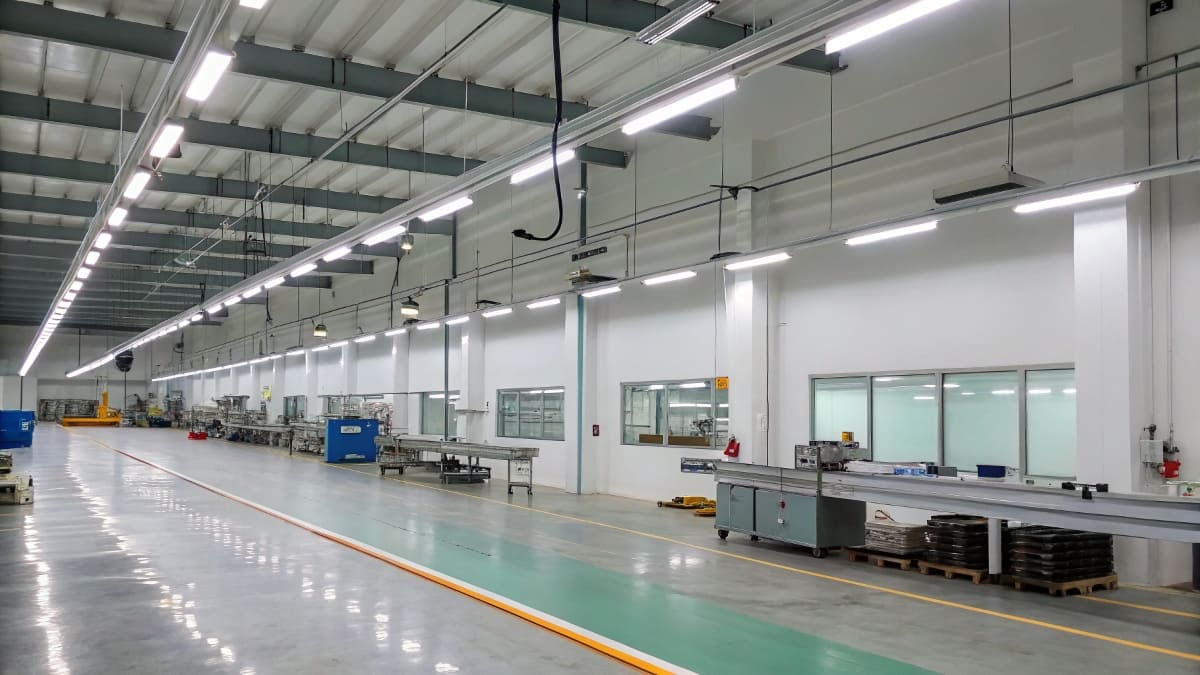
An LED tri-proof light is a durable, sealed lighting fixture specifically engineered to resist water, dust, and impact—hence the name "tri-proof." These fixtures are ideal for harsh environments like warehouses, food processing plants, parking garages, and factories. They provide bright, energy-efficient illumination while offering a long lifespan and minimal maintenance requirements.
With so many options on the market, how do you move beyond a simple spec sheet to find a solution that will genuinely last in your specific application?
How Do You Choose the Right LED Tri-Proof Light?
Picking an industrial light fixture can feel overwhelming. You're faced with dozens of options, all claiming to be "durable" and "waterproof." If you choose incorrectly, you risk premature failure, operational disruptions, and a wasted investment, forcing you to start the procurement process all over again.
The most effective way to choose the right fixture is to shift your focus from generic specifications to the specific challenges of your operational environment. This means asking suppliers scenario-based questions that directly relate to the stresses the light will endure on a daily basis.
Dive Deeper: An Environment-First Selection Process
In my 10+ years of helping clients specify industrial lighting, I've seen a common mistake: buyers fixate on a single number, like an IP rating, without considering the full context. A high IP rating is a good start, but it doesn't tell the whole story. A fixture that is perfectly waterproof when submerged in a lab test might fail quickly when exposed to high-pressure jets or corrosive chemicals.
Effective procurement requires a deeper level of inquiry. It’s about translating your real-world conditions into questions that a supplier must answer with specific performance data.
H3: Move Beyond Spec Sheets with Scenario-Based Questions
Instead of simply asking, "Is this light IP67 rated?" you need to describe the environment. This forces the supplier to validate the product's suitability for your actual use case, not just a standardized test.
Here’s how this approach works across different environmental stressors:
- Water Ingress: The term "waterproof" is vague. Are you dealing with ambient humidity, condensation, low-pressure washdowns, or high-pressure, high-temperature cleaning jets?
- Chemical Exposure: In agricultural settings like livestock farms, ammonia vapor is a primary cause of corrosion. In food processing plants, caustic cleaning agents can degrade seals and housings. You must verify material compatibility.
- Impact and Vibration: In a busy warehouse with forklifts or a manufacturing facility with heavy machinery, accidental impacts and constant vibration are a given. The fixture's IK (Impact Protection) rating and overall construction become critical.
Here is a table comparing a typical spec-based question with a more effective scenario-based question:
| Stressor | Standard Spec-Based Question | Better Scenario-Based Question |
|---|---|---|
| Water | "Is this fixture IP66 rated?" | "Can this fixture withstand daily washdowns with 100-bar water jets at 60°C?" |
| Chemicals | "Is the housing corrosion-proof?" | "What is the fixture's resistance to prolonged exposure to ammonia vapor and alkaline cleaning solutions with a pH of 11?" |
| Impact | "What is the IK rating?" | "Is the fixture, including the lens and clips, rated to withstand accidental impact from a forklift at low speeds?" |
Asking these detailed questions helps you filter out suppliers who don't truly understand the demands of harsh environments. It also provides you with a much stronger basis for your procurement decision.
H3: Scrutinize the 'Weakest Links': Gaskets, Seals, and Cable Glands
A common point of failure I've observed in lower-quality tri-proof lights isn't the main housing, but the components that are supposed to seal it. The housing itself might be robust polycarbonate or aluminum, but if the gasket is made from a cheap material that hardens and cracks, the IP rating becomes meaningless.
When evaluating an LED tri proof light, pay close attention to these critical components:
- Gasket Material: Look for high-quality, continuous-poured silicone gaskets. Silicone offers excellent resistance to both high and low temperatures and is less prone to degradation from UV exposure and chemicals compared to cheaper materials like EPDM or neoprene.
- Sealing Mechanism: How is the fixture sealed? Are there multiple clips applying even pressure along the entire length of the gasket? A single weak point can compromise the entire fixture. I've seen fixtures with as few as four clips fail, while those with ten or more maintain their integrity.
- Cable Glands/Entries: The point where the power cable enters the fixture is a major vulnerability. A high-quality cable gland will create a watertight seal around the cable. Ensure it is rated for the same environmental conditions as the fixture itself and is made from durable, corrosion-resistant materials.
A truly robust solution considers the integrity of the entire system. A good supplier should be able to provide details on the materials and design of these "weakest links."
H3: Understanding Material and Construction
The choice of housing material has a significant impact on the fixture's performance, longevity, and suitability for different applications. The two most common materials for an LED tri proof light are polycarbonate (PC) and aluminum.
- Polycarbonate (PC) Housings: PC is prized for its high impact resistance and inherent resistance to many chemicals. It's often the material of choice for food processing facilities and areas where chemical exposure is a concern. However, lower-quality PC can yellow over time when exposed to UV radiation, which can reduce light output. Look for UV-stabilized PC.
- Aluminum Housings: Aluminum's primary advantage is its excellent thermal conductivity. It acts as a superior heat sink, drawing heat away from the LED chips and driver. This is crucial for extending the lifespan and maintaining the lumen output of the LEDs, especially in high-temperature environments like foundries or factories.
As a manufacturer with our own aluminum die-casting workshop, we have a deep appreciation for the benefits of a well-designed aluminum body. It gives us direct control over the fixture's thermal management capabilities and structural integrity, ensuring reliable performance.
Here's a quick comparison:
| Feature | Polycarbonate (PC) | Aluminum |
|---|---|---|
| Impact Resistance | Excellent | Good to Very Good |
| Chemical Resistance | Very Good | Depends on coating/finish |
| Heat Dissipation | Fair | Excellent |
| UV Resistance | Good (if stabilized) | Excellent |
| Weight | Lighter | Heavier |
| Best For | Food processing, chemical plants | High-temp industrial, warehouses |
Ultimately, the best material depends on the hierarchy of needs in your environment. Is impact resistance the top priority, or is superior heat dissipation in a hot factory more critical? This is another key discussion to have with your supplier.
Frequently Asked Questions
What's the difference between IP65, IP66, and IP67?
These ratings define a fixture's protection against solids and liquids. IP65 means it's dust-tight and protected against low-pressure water jets. IP66 adds protection against powerful water jets. IP67 means it can be temporarily submerged in water (up to 1 meter for 30 minutes). Your choice depends on the specific water exposure in your environment.
Can an LED tri-proof light be used in a food processing plant?
Yes, but it's critical to choose the right one. Look for fixtures with a smooth, easy-to-clean housing (often polycarbonate), and seals/gaskets made from materials that are resistant to the specific caustic cleaning agents used in your facility.
What is an IK rating and why does it matter for tri-proof lights?
The IK rating measures a fixture's resistance to mechanical impact, from IK00 (no protection) to IK10 (protected against 20 joules of impact). For a warehouse with forklift traffic or an industrial workshop, a high IK rating (IK08 or above) is essential to protect the light from accidental bumps and ensure its longevity.
How does temperature affect the performance of an LED tri-proof light?
Extreme temperatures, both hot and cold, can impact performance and lifespan. In high-heat environments, a fixture with an excellent heat sink (like one with an aluminum body) is critical to prevent the LEDs from overheating. For cold storage, ensure the driver is rated to operate at low temperatures.
Conclusion
Choosing the right LED tri proof light goes far beyond comparing numbers on a specification sheet. It requires a thoughtful analysis of your specific operating environment—from water exposure and chemical agents to impact risks and ambient temperature. By shifting your procurement process to focus on scenario-based questions, you can identify a truly robust solution and a knowledgeable supplier who understands your needs. Scrutinize the construction, pay attention to the seals and materials, and you will invest in a lighting system that delivers safety, reliability, and long-term value.
If you are an importer, EPC contractor, or project developer looking for a reliable OEM/ODM partner for your industrial lighting requirements, we can help. With over a decade of experience and our own manufacturing facilities, we specialize in engineering the perfect LED tri proof light for demanding applications worldwide. Contact us to discuss your project needs.
Christina
B2B Sales & Product Expert
10+ years in LED & solar lighting manufacturing. Helping global wholesalers and EPC contractors source reliable OEM/ODM solutions from China.
Looking for a Reliable Lighting Partner?
We support low MOQ and offer customized engineering for commercial, industrial, and solar lighting projects globally. Partner with our Zhongshan/Jiangmen dual factories today.